

What can bio-based surfactants change in textile processing?
Behind many textile processes lies a chemistry that, although not always visible in the finished...
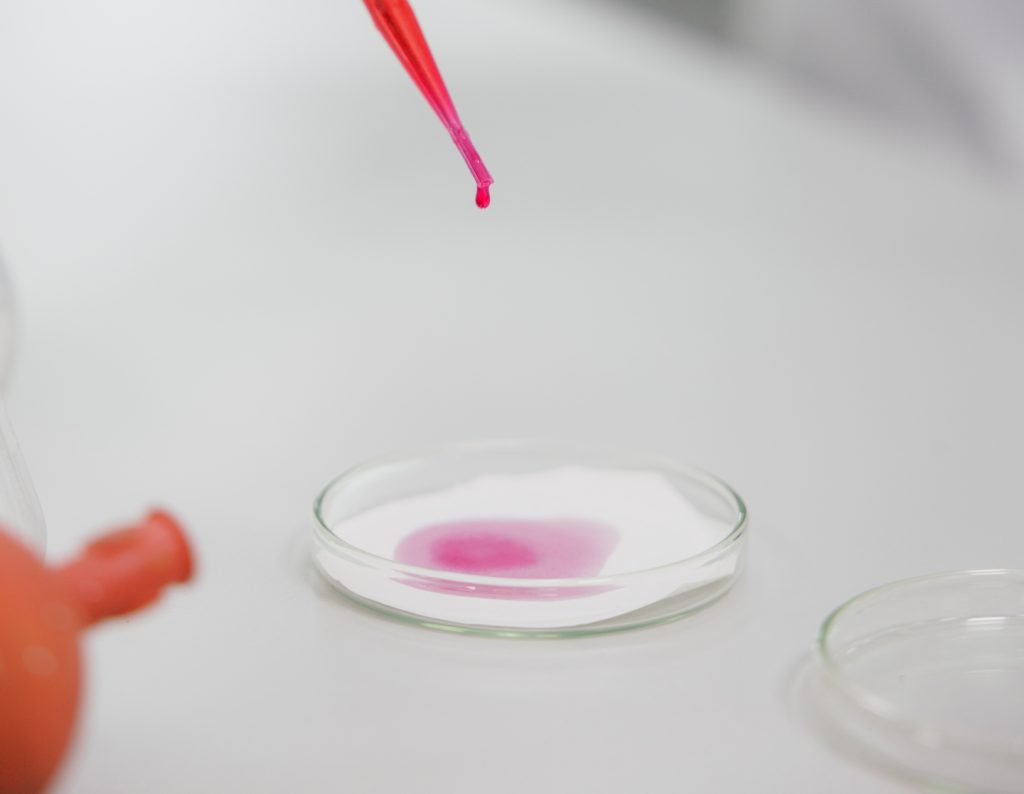
Behind many textile processes lies a chemistry that, although not always visible in the finished product, is essential to its manufacture. Surfactants are a clear example of this.
These substances modify the properties of interfaces between liquids, solids and gases, facilitating operations such as fibre wetting, impurity removal and the distribution of chemicals in processing baths. Their behaviour influences both treatment efficiency and the consistency of results.
The search for alternatives to fossil-based raw materials is driving the development of bio-based surfactants. However, their integration into the textile industry raises questions that go beyond the origin of their components.
What can these alternatives bring to textile processing? What results has research demonstrated so far, and what challenges remain for their industrial application?
Answering these questions requires considering chemistry, technical performance and environmental impact together.
The role of surfactants in textile processing
Many textile manufacturing operations take place in aqueous media, where the interaction between water, fibres and chemical formulations determines the effectiveness of a treatment.
Surfactants are amphiphilic molecules, meaning they contain both hydrophilic (water-attracting) and hydrophobic (water-repelling) groups. This molecular structure allows them to modify surface and interfacial tension, facilitating interactions between substances that would otherwise have limited affinity.
In textile processing, their main functions include:
- Wetting and bath penetration. By reducing surface and interfacial tension, surfactants facilitate contact between aqueous formulations and textile substrates, promoting more uniform wetting and penetration.
- Detergency and impurity removal. During textile pretreatment, surfactants help remove natural oils, waxes and processing residues that could interfere with subsequent dyeing or finishing operations.
- Emulsification. They facilitate the formation and stabilisation of emulsions, allowing water-insoluble substances, such as oils and certain finishing agents, to be distributed within aqueous formulations.
- Dispersion. They help prevent the aggregation of particles, such as pigments and certain dyes, contributing to bath stability and reducing the risk of uneven application.
These functions make surfactants essential auxiliaries across different stages of textile wet processing, from preparation and dyeing to printing and finishing.
Replacing conventional surfactants with bio-based alternatives therefore involves more than changing the origin of their raw materials. It requires understanding whether the new molecules can fulfil the same technical functions under specific processing conditions.
Bio-based surfactants and biosurfactants: understanding the difference
Although the terms bio-based surfactants and biosurfactants are frequently used interchangeably, they do not necessarily describe the same group of substances.
The term bio-based refers primarily to the origin of the raw materials, whereas biosurfactant generally refers to surface-active substances produced by living organisms, particularly microorganisms.
Bio-based surfactants can be obtained through the chemical transformation of renewable raw materials, such as vegetable oils, sugars and fatty acids. Biosurfactants, on the other hand, can be produced through biological processes such as microbial fermentation.
These categories can overlap, but their feedstocks, production methods and molecular structures may differ considerably.
A 2025 scientific review on bio-based surfactants and biosurfactants identifies several families of compounds that illustrate this diversity:
- Alkyl polyglucosides (APGs). Non-ionic surfactants obtained by combining sugars with fatty alcohols, which can be derived from renewable resources. Their wetting and emulsifying properties make them particularly interesting for aqueous chemical formulations.
- Saponins. Naturally occurring surface-active compounds extracted from plants such as soapnuts. Their detergency, emulsifying and foaming properties offer potential for alternative textile preparation processes.
- Rhamnolipids. Glycolipid biosurfactants produced by certain bacteria through fermentation. Their ability to reduce surface and interfacial tension makes them interesting candidates for cleaning and wetting applications.
- Sophorolipids. Glycolipid biosurfactants produced by certain yeasts. Differences in their molecular structure influence properties such as solubility, surface activity and foaming behaviour.
Recent research into bioderived and bio-produced surfactants highlights how these different production routes offer opportunities for chemical innovation while presenting distinct challenges in terms of formulation flexibility, production costs and industrial scalability.
For the textile industry, this distinction is particularly relevant. Understanding how these molecules are obtained, structured and formulated helps determine which alternatives may be suitable for specific processing requirements.
What does the research tell us?
Research into alternative surfactants for textile processing has moved beyond molecular characterisation to experimental applications. Cotton and wool scouring are particularly interesting areas of study, as both processes require the effective removal of hydrophobic impurities to prepare fibres for subsequent treatments.
Rhamnolipids in cotton scouring
A 2014 study published in Carbohydrate Research investigated the use of rhamnolipids in combination with pectinase enzymes as an alternative to conventional alkaline cotton scouring.
Under the experimental conditions, the combined treatment achieved comparable or better scouring efficiency while causing less damage to the fabric structure. These findings illustrate the potential of combining biosurfactants with enzymatic technologies.
Plant-derived surfactants in cotton preparation
A 2023 study published in Heliyon evaluated saponin-rich soapnut extract as a natural surfactant in the enzymatic scouring of knitted cotton fabrics.
At concentrations of 1–2 g/L and a processing temperature of 55 °C, the treatment achieved an average wetting time of 4.86 seconds. Subsequent reactive dyeing also produced satisfactory colour uniformity and colour fastness, although conventional alkaline scouring achieved faster wetting.
Different biosurfactants, different results
A study published in Coloration Technology compared two plant-derived surfactants for raw wool scouring: a saponin and a surface-active oat extract.
While the saponin demonstrated effective contaminant removal and colour results comparable to those obtained with a conventional synthetic surfactant, the oat extract performed considerably less effectively.
Combining biosurfactants with emerging processing technologies
More recently, a 2026 study on ultrasound-assisted wool scouring investigated the combination of sophorolipids and ultrasound technology.
Compared with conventional scouring, the experimental process achieved:
- Residual grease content of 0.98%, compared with 1.5%.
- A processing temperature 10 °C lower.
- A treatment time reduced by 15 minutes.
- Approximately 19% lower chemical oxygen demand (COD) in the effluent.
However, biological oxygen demand (BOD) increased, highlighting the importance of evaluating environmental performance through multiple indicators rather than a single parameter.
Together, these studies demonstrate that alternative surfactants can deliver promising technical results under specific experimental conditions. They also highlight the importance of interactions between surfactants, enzymes and processing technologies.
However, experimental effectiveness is not equivalent to industrial readiness. These findings should be understood as evidence of technological potential rather than proof of widespread industrial adoption or universal environmental benefits.
The challenge goes beyond the origin of raw materials
The transition towards bio-based surfactants cannot be assessed solely in terms of the renewable origin of their components. In industrial textile processing, a chemical alternative must meet technical, environmental and economic requirements simultaneously.
A surfactant may demonstrate excellent surface activity under laboratory conditions, but its performance can change when exposed to different temperatures, pH levels, water hardness or combinations of chemical auxiliaries.
Several criteria are therefore particularly relevant when assessing industrial viability.
| Evaluation criterion | Key technical question |
| Wetting | How quickly and uniformly does the processing bath penetrate the textile substrate? |
| Detergency | How effectively does it remove oils, waxes and other impurities? |
| Foam control | Is its foaming behaviour compatible with industrial machinery and processing speeds? |
| Stability | Does it maintain its effectiveness under different temperature, pH and water hardness conditions? |
| Compatibility | How does it interact with dyes, enzymes, electrolytes and other chemical auxiliaries? |
| Biodegradability | What experimental evidence supports its biodegradability under standardised test conditions? |
| Economic viability | Can it deliver consistent results at a competitive overall processing cost? |
These criteria are interconnected. A surfactant with excellent detergency may generate excessive foam, while an alternative requiring higher dosages or additional processing stages could offset some of its potential environmental benefits.
Environmental assessment also requires particular attention. Renewable origin does not automatically imply biodegradability or lower environmental impact. Standardised methods, such as the OECD 301 guidelines for ready biodegradability, provide a recognised framework for evaluating biodegradation under controlled conditions.
Furthermore, as highlighted in a 2025 scientific review on bio-based auxiliaries in textile wet processing, scalability, cost competitiveness, raw material consistency and process optimisation remain important challenges for broader industrial adoption.
Ultimately, the objective is not simply to replace a conventional surfactant with one of renewable origin, but to develop formulations that achieve a viable balance between technical performance, environmental impact and industrial efficiency.
From research to industrial application
Identifying a promising surfactant molecule is only the first step towards developing an industrially viable textile auxiliary. Its effectiveness also depends on how it is formulated, combined with other chemical components and adapted to specific production requirements.
Formulation plays a central role in this transition. Parameters such as concentration, solubility, foam behaviour and compatibility with other auxiliaries must be optimised to achieve consistent performance.
Experimental validation should progressively move from controlled laboratory tests to pilot-scale trials and, ultimately, real production conditions. This progression makes it possible to identify limitations that may not be apparent in initial laboratory studies, including variations in water quality, mechanical agitation and processing times.
Collaboration between chemical manufacturers, textile mills and research institutions is particularly valuable during this transition. Combining chemical expertise with practical knowledge of manufacturing processes helps establish whether a new formulation can consistently meet industrial requirements.
At ADRASA, this approach is reflected in our applied research and development activities. One example is our ongoing research project under the PERTE Textiles programme, co-funded by the European Union through NextGenerationEU and focused on developing bio-based textile auxiliaries and finishes, with particular attention to fluorine-free omniphobic treatments for outdoor and technical textiles.
The project incorporates industrial validation and technology transfer, reflecting the importance of connecting chemical research with manufacturing requirements.
For bio-based surfactants, this same principle is fundamental: the success of a chemical alternative is ultimately determined not only by what it achieves in the laboratory, but by what it can consistently deliver in industrial production.
Conclusion
Bio-based surfactants open new possibilities for innovation in textile chemistry. Research has demonstrated their potential in processes such as fibre wetting and scouring, while also highlighting the limitations that must be addressed before broader industrial adoption.
The challenge is to integrate renewable raw materials, environmental performance and the technical requirements of textile manufacturing into a single development approach. These aspects should not be evaluated independently, but as interconnected factors throughout the formulation and validation process.
The future of textile chemistry will depend not only on finding alternative resources, but also on understanding how to transform them into reliable and effective industrial solutions.
Changing the origin of chemistry is a starting point. Turning that change into measurable improvements is the real challenge.