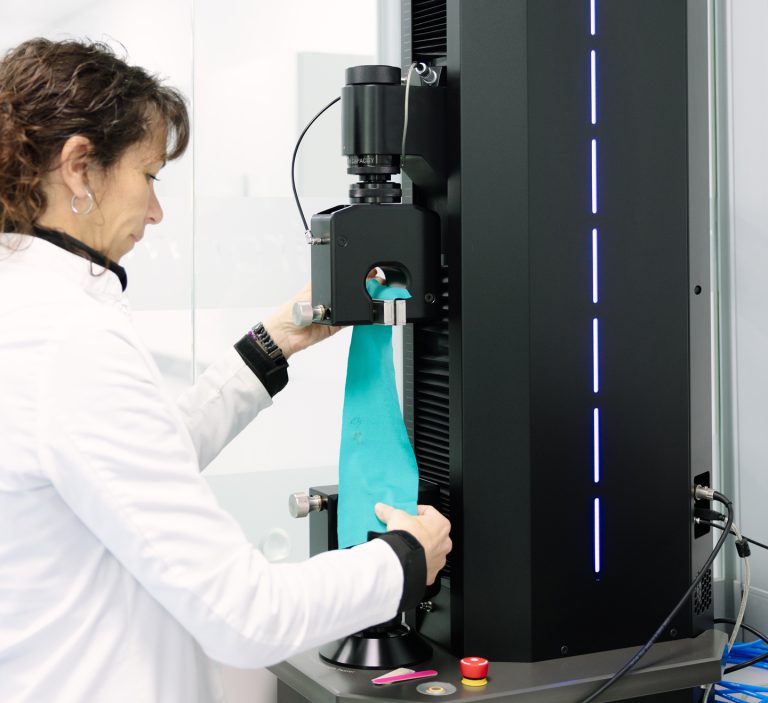


Why lab validation is only the beginning
A successful laboratory result is essential, but industrial value depends on scalability, process...
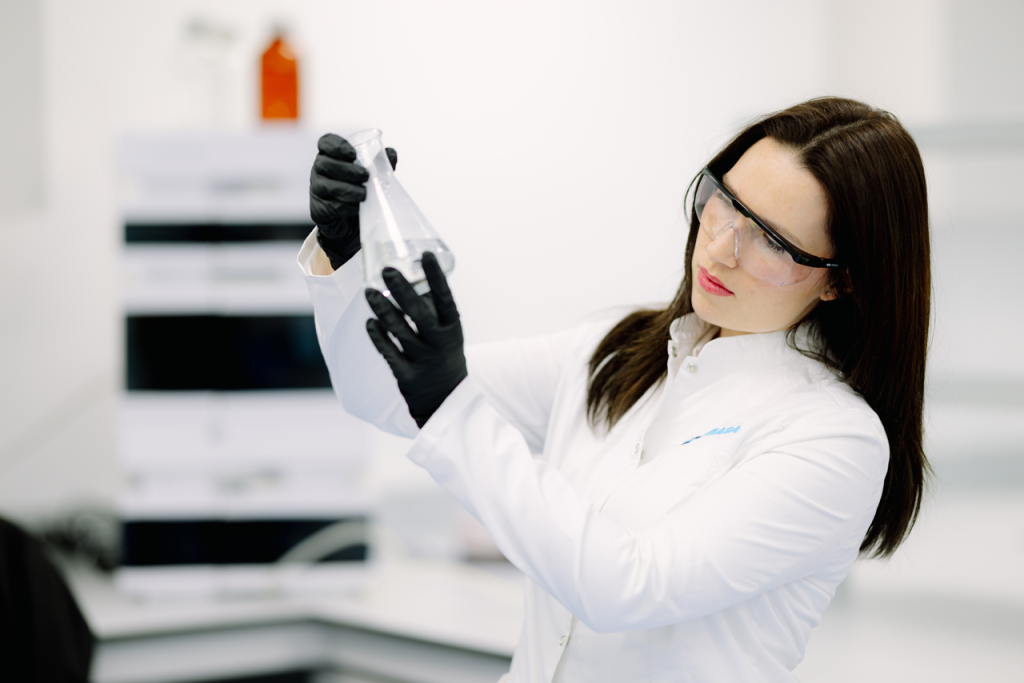
In textile chemistry, a result that works well in the lab is not yet the final proof of value.
Controlled trials are essential. They help identify whether a formulation can deliver a certain effect, whether a finish behaves as expected, or whether a technical approach deserves further development. But lab performance alone does not guarantee that the same result will hold once the solution reaches real production conditions.
That is where many promising ideas are truly tested.
Industrial reality introduces variation, pressure and constraints that the lab cannot fully reproduce: different machines, different substrates, different process rhythms, different levels of control, and different operational margins. A solution that looks convincing in a controlled environment may still prove difficult to apply consistently at scale.
That is why useful innovation in textile chemistry should not be judged only by whether it performs once under ideal conditions. It should also be judged by whether it can remain reliable, applicable and technically credible beyond the lab.
Real production introduces different conditions
Once a solution leaves the lab, it enters a very different environment.
In real production, results are shaped not only by the formulation itself, but by the interaction between machines, substrates, operating speeds, temperature, moisture and the wider conditions of the process.
That difference matters. A finish that performs well in a controlled trial may respond differently when applied across larger runs, under changing process rhythms, or on materials that do not behave in exactly the same way from one batch to another. In manufacturing, variation is not an exception but a normal part of the process, which is why process control becomes essential once a solution moves beyond small-scale validation.
This is especially relevant in textile finishing, where performance depends on more than a single laboratory result. It depends on whether the chemistry can remain stable and technically credible when exposed to repeated application, operational margins, scale and the need for consistent results over time.
That is why moving from lab to production should not be seen as a simple extension of the same result. It is a new phase of validation, where applicability, robustness and control begin to matter just as much as the initial technical effect.
Why scalability is not automatic
A result that works at small scale does not automatically remain reliable when the process grows.
This is one of the most important gaps between technical promise and industrial reality. In the lab, variables can usually be controlled more tightly, timing is easier to adjust, and the environment is designed to reduce noise. But once a solution moves toward production, the same chemistry has to operate under wider ranges of process parameters, material attributes and operational constraints.
That is why scalability should not be understood as a simple matter of doing more of the same. According to the process validation guidance, validation is not limited to early development or isolated testing. It is defined as the collection and evaluation of data from the process design stage through commercial production, including confirmation that a process is capable of reproducible commercial manufacturing.
The same logic appears in the ICH Q8(R2) guideline, which states that development should build the knowledge needed for a manufacturing process to consistently deliver the intended performance of the product. It also makes clear that when a design space is developed at small or pilot scale, its relevance to production scale manufacturing has to be justified, including the potential risks that can appear during scale-up.
This matters because a promising technical effect is not yet the same as a robust industrial solution. Once production scale enters the picture, the process must tolerate a broader operational reality: different equipment behaviour, variable substrates, tighter production rhythms, and less room for manual correction. In other words, scale does not simply increase volume. It tests whether the result can still hold when the process becomes more exposed to normal variation.
That is why scalability is not automatic. It has to be built through process understanding, technical adjustment and validation under conditions that are close enough to the reality in which the solution is expected to perform. As ICH Q8(R2) puts it, a control strategy is there to ensure that a product of the required quality is produced consistently.
Validation is what makes innovation useful
In textile chemistry, innovation becomes useful only when it can move beyond promising trials and prove that it can hold under real production conditions.
That is why validation matters so much. It is not just a final checkpoint after development, but the stage where a technical solution starts to demonstrate whether it can remain credible once it is exposed to scale, variation and operational reality.
Useful innovation should not be described only in terms of novelty. A solution may be new, interesting or technically elegant, but if it cannot maintain performance outside a controlled setting, its practical value remains limited. What makes innovation useful is not only what it achieves in a trial. It is what validation confirms about its robustness, its applicability and its ability to remain manageable under the conditions where it is actually expected to perform.
In that sense, validation is not a secondary step. It is what separates an encouraging result from a solution that can genuinely support industrial decision-making.
Technical support matters after the trial
A successful trial is important, but it is rarely the end of the real technical work.
Once a solution moves beyond the lab, the challenge is no longer only whether it can produce a desired effect once. The challenge is whether that effect can remain reliable when the process is exposed to normal production variability, scale, operational limits and day-to-day decision-making.
That is where technical support becomes relevant: not as a commercial add-on, but as part of how process understanding, knowledge transfer and continued control are sustained in practice.
This matters because validation is not a one-time event detached from the rest of the process lifecycle. The FDA describes process validation as a lifecycle activity that runs from process design through commercial production, while its third stage, continued process verification, is specifically focused on maintaining the process in a state of control during routine manufacturing.
The same lifecycle logic appears in the ICH Q10 guideline, which treats technology transfer, process performance and product quality monitoring, knowledge management, and continual improvement as connected parts of a single quality system.
This is why technical support after a trial should not be seen as secondary. Once a solution enters real production, questions still need to be answered: how should the process be adjusted, which variables matter most, where are the operational margins, what kind of variation is acceptable, and what changes may affect performance. Without that follow-through, even a promising validated result can lose practical value when it faces real manufacturing complexity.
In that sense, technical support is part of what turns a good result into a usable one. It helps carry product and process knowledge beyond the trial, strengthens process control, and increases the chances that innovation will remain applicable once the conditions are no longer ideal.
Responsible innovation needs real applicability
In textile chemistry, innovation cannot be considered truly responsible if its value depends too heavily on ideal conditions.
A solution may look promising from a technical point of view, but responsibility begins to matter when that solution has to perform in the kinds of environments where it will actually be used.
That is why real applicability matters so much. If a finish only works under narrowly controlled conditions, requires excessive correction, or becomes difficult to manage once the process changes, then its practical value remains limited, no matter how interesting the initial result may be.
This is closely aligned with the logic behind the ICH Q8(R2) guideline, which states that development should generate the knowledge needed to design a product and its manufacturing process so that they can consistently deliver the intended performance. The guideline also makes clear that when development work is done at smaller or pilot scale, its relevance to production scale manufacturing must be justified, together with the potential risks of scale-up.
That is why responsible innovation should not be judged only by novelty, technical elegance or laboratory success. It should also be judged by whether it remains usable, stable and technically credible when exposed to normal variability, operational constraints and the need for continued control.
In that sense, real applicability is not a secondary advantage. It is part of what makes innovation responsible. A technically advanced solution only becomes genuinely useful when it can support reliable performance in the environment where industrial decisions are actually made.
Conclusion
In textile chemistry, a promising lab result is important, but it is not the final measure of value.
What ultimately matters is whether that result can remain reliable once it reaches the complexity of real production: different materials, changing process conditions, operational limits and the normal variability of industrial work. That is where technical promise becomes either useful or fragile.
This is why lab validation should be understood as the beginning, not the conclusion. It helps identify potential, but it does not yet confirm industrial relevance. That confirmation only starts to take shape when the solution proves that it can remain applicable, manageable and technically credible beyond controlled conditions.
Useful innovation is not the one that performs once in the best possible setting. It is the one that can hold its value when the process becomes real.
If this is a challenge your process is facing, explore more insights on the ADRASA blog or contact our team to continue the conversation.