

Robustness is built in the process, not confirmed at the end
A successful textile finishing trial is not the same as a robust process. Reliability depends on...
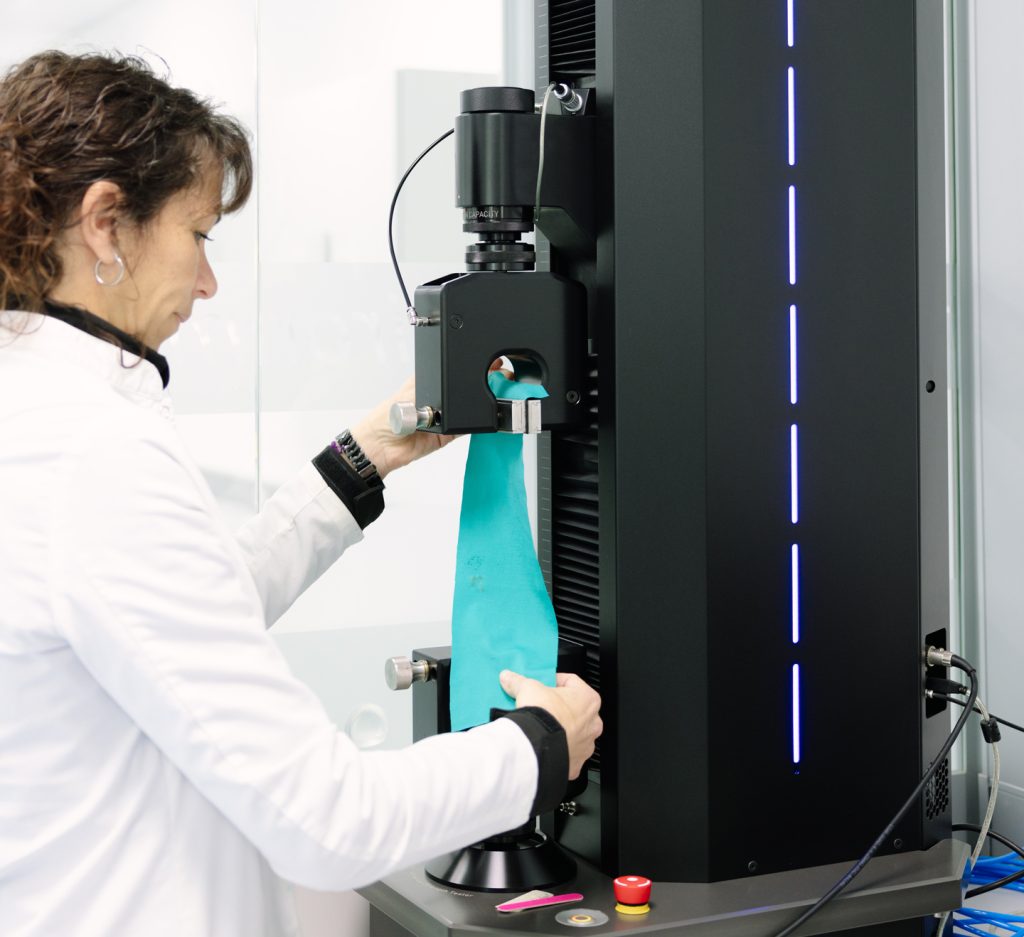
A successful trial is an important step in textile finishing. It shows that a formulation, a treatment or an application route can achieve the expected result under defined conditions. It gives technical evidence. It reduces uncertainty. It confirms that the solution has potential.
But a successful trial is not the same as a robust process.
In textile finishing, performance is never isolated from the conditions that produce it. The same finish may behave differently depending on the substrate, the construction of the fabric, the quality of the water, the stability of the bath, the application method, the drying or curing conditions, and the interaction with other auxiliaries. This is why standard textile testing and quality control methods are essential: they help evaluate performance in a consistent way, but they do not remove the need to understand the process behind the result.
Validation answers one important question: did the solution work under the conditions tested?
Robustness asks a different question: can the solution continue to work when the process is exposed to the normal variations of industrial production?
This difference matters. A finish that performs well in one trial may still be sensitive to small changes in temperature, pick-up, pH, curing time, machine speed or substrate variation. In the laboratory, these variables can be controlled closely. In production, they need to be managed within realistic margins.
That is why robustness should not be treated as an afterthought. It is part of the technical value of a finishing solution. A robust finish is not one that works only when everything is ideal. It is one that can maintain the required performance when the process remains under control, but not perfectly identical every time.
For manufacturers, this distinction is especially important when moving from a validated sample to a reliable industrial implementation. The objective is not only to obtain one correct result. The objective is to build confidence that the result can be repeated, monitored and maintained.
In this sense, robustness connects technical performance with process responsibility. It supports quality, reduces unnecessary corrections and helps make chemical innovation more applicable in real production environments. This is also aligned with the broader direction of sustainable textile production and chemical management, where environmental performance, resource efficiency, emissions control and process quality are increasingly evaluated together rather than separately.
A textile finish is not truly ready when it works once. It becomes reliable when it is robust enough to hold.
Robustness starts with knowing the critical variables
A finishing process becomes robust when the variables that influence performance are identified, controlled and monitored. This does not mean controlling everything with the same intensity. It means knowing which parameters can change the final result.
In textile finishing, these variables may include the substrate, bath concentration, pH, pick-up, drying temperature, curing time, machine speed and the compatibility between auxiliaries. Some of them are measured through standard textile testing. Others are managed through process experience, technical observation and production control.
This is where robustness begins: not after a problem appears, but before scale-up, by understanding which conditions are critical and which margins are acceptable.
A validated trial confirms that a result is possible. A robust process defines what must remain under control for that result to be repeated.
The importance of a process window
A robust finishing solution needs more than one correct set of conditions. It needs a process window: a defined range within which the finish can still deliver the expected performance.
This range may include acceptable limits for concentration, temperature, time, pH, pick-up or drying and curing conditions. If the window is too narrow, the solution may work in a trial but become difficult to reproduce in production. Small deviations can then lead to inconsistent results, rework or unnecessary adjustments.
A wider and well-understood process window gives manufacturers more confidence. It does not remove the need for control, but it makes the process more resilient to normal industrial variation.
For this reason, robustness is not only about the chemistry itself. It is also about how the chemistry behaves when applied through real equipment, real substrates and real production rhythms.
Compatibility is part of robustness
A textile finish rarely works alone. In many production processes, it must coexist with softeners, resins, wetting agents, dispersants, repellents, binders, dyes or other auxiliaries. Each interaction can influence bath stability, application behaviour and final performance.
This is why compatibility should be considered part of robustness. A formulation may perform well by itself, but lose consistency when introduced into a more complex recipe, applied after previous treatments or combined with other chemical inputs. This is also why chemical management frameworks such as ZDHC place emphasis on safer input chemistry and controlled use during textile and footwear production.
Good technical development does not evaluate a finish in isolation only. It considers the chemical environment in which the solution will actually be used, including the sequence of application, the process conditions and the expected performance after finishing. Standardized textile testing and evaluation methods help verify results, but compatibility still needs to be understood within the real recipe and production context.
A robust solution is not only effective. It is compatible with the system around it.
Why robustness reduces corrections and rework
Robustness is especially important when a new performance requirement is added to an existing finishing process. In technical textiles, a manufacturer may already be working with a defined system: a specific substrate, a water-repellent finish, a crosslinking agent, a wetting agent, a curing profile and a later lamination step.
In that context, the question is not only whether an additional finish can provide a new function. The real question is whether it can be integrated without creating instability, reducing durability or interfering with the next stage of production.
This is why technical recommendation should consider the complete process sequence. Adding a new functionality may require checking compatibility, application order, drying and curing conditions, wash durability and the effect on later operations such as membrane lamination. Guidelines on chemical management and controlled textile processing increasingly point in the same direction: performance, safety and process control need to be evaluated together.
When this work is done properly, manufacturers reduce the risk of corrections, failed trials, reprocessing and unnecessary consumption of time, water, energy or chemistry.
A robust solution does not simply add performance. It helps the process move forward with fewer surprises.
Documenting parameters to make results repeatable
A robust finishing process needs clear documentation. Once the critical variables have been identified, they must be translated into practical application parameters: concentration, bath conditions, pH, pick-up, drying temperature, curing time, machine speed, sequence of application and testing criteria.
This documentation helps move the solution from individual expertise to shared production knowledge. It makes the process easier to repeat, easier to monitor and easier to troubleshoot when results begin to drift.
Standard textile testing and evaluation methods are useful because they provide consistent ways to check whether the expected performance has been achieved. But documentation should also include the process conditions that made that performance possible.
Without this link between result and process, a successful finish can become difficult to reproduce. With it, manufacturers gain a clearer basis for quality control, scale-up and continuous improvement.
Conclusion
In textile finishing, validation is essential. It confirms that a solution can achieve the expected result under defined conditions. But industrial reliability depends on what happens next: how the process is controlled, how the variables are managed and how consistently the result can be reproduced.
Robustness gives manufacturers confidence because it connects performance with process reality. It helps reduce uncertainty, avoid unnecessary corrections and support more stable production.
This is especially important when finishing systems become more complex, more sustainable or more functional. The more a textile finish is expected to do, the more important it becomes to understand the conditions that allow it to perform.
A robust finish is not simply one that works. It is one that can be trusted to keep working.
Looking to make your finishing process more reliable?
ADRASA supports textile manufacturers in developing, adjusting and implementing finishing solutions that are not only effective, but robust enough for real production conditions.
Contact our technical team to discuss your process, performance targets and application requirements.