


Microfiber release starts long before washing
The release of microfibers has become one of the most relevant debates within the textile industry...
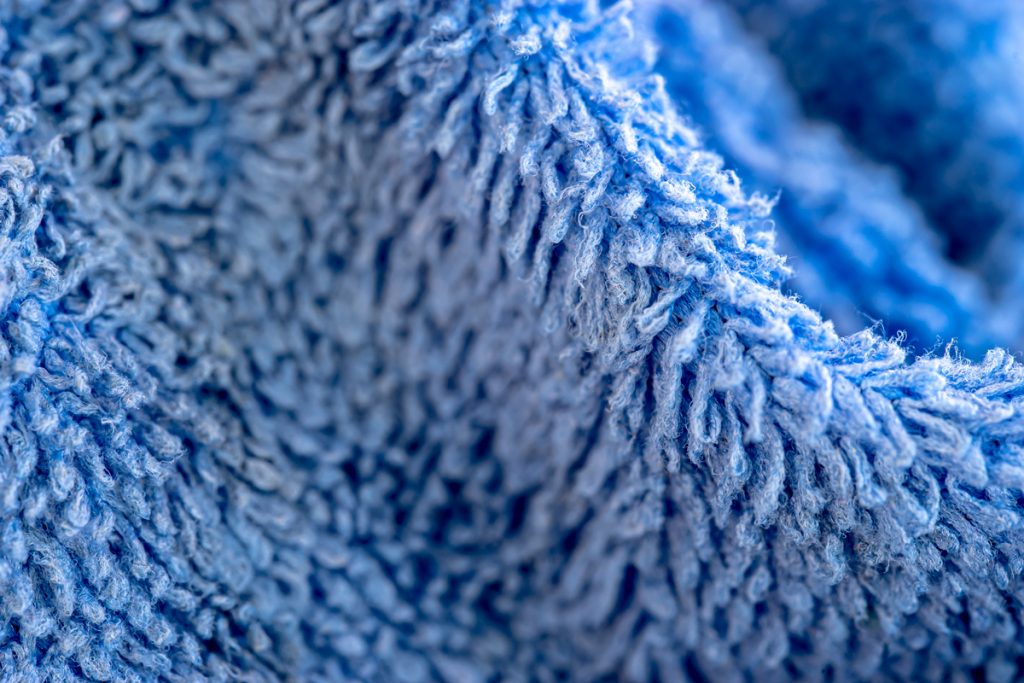
The release of microfibers has become one of the most relevant debates within the textile industry when discussing sustainability, environmental impact, and process responsibility. In recent years, the conversation has gained visibility and has helped bring attention to an issue that affects both the behavior of textile products and their relationship with the environment.
However, much of this debate is still concentrated at the end of the cycle: washing, domestic use, waste management, or the possible retention of particles once they have already been shed. These are necessary perspectives, but they are not enough. When reflection begins only at that point, there is a risk of addressing the consequence without fully reviewing the conditions that make it possible.
In reality, an important part of the problem begins much earlier. Fiber choice, fabric construction, yarn quality, upstream processes, and finishing decisions also influence how a textile behaves over time. That is why, if microfiber release is to be addressed more rigorously, it is necessary to look further back in the process and understand which factors may help reduce it from the start.
The problem does not begin in washing, but much earlier
Although domestic washing is one of the moments when microfiber release becomes most visible, it should not be understood as the sole origin of the problem. In reality, fiber shedding is usually shaped by a chain of earlier decisions that affect textile behavior long before the product reaches its final use.
Among these factors, fiber type carries significant weight. The nature of the material, its length, tenacity, and behavior under abrasion all influence how easily it may fragment or shed during use and washing. Recent literature insists that there is no single determining variable, but rather a combination of material properties that conditions the tendency to release microfibers.
Fabric structure is also decisive. The way yarns are arranged, the degree of compactness, weight, thickness, or the type of textile construction can modify the material’s mechanical stability and its response to friction. In fact, several studies have observed significant differences in microfiber release depending on fabric construction, which reinforces the idea that the problem does not appear in isolation at the end of the cycle, but is linked to textile design from earlier stages.
Yarn spinning also plays a key role. Aspects such as yarn type, twist level, hairiness, or the effective length of the fibers can influence the cohesion of the structure and the ease with which loose fibers are generated on the surface. In general terms, yarns with lower hairiness and greater cohesion tend to show more favorable behavior against shedding.
To this we must add upstream manufacturing processes, where mechanical stress, abrasion, localized weakening, or surface alterations may already occur and affect the later behavior of the fabric. Textile production is not neutral in this respect: certain operations can leave the material more exposed to wear or shedding even before its first use.
Applied finishes are also part of this equation. Although they do not act in isolation and cannot explain everything, they can modify the fabric surface, its hand feel, its stability, or its response to friction, thus influencing factors that favor or limit microfiber release.
Finally, the textile’s mechanical resistance and surface behavior are determining factors. Microfiber release does not depend only on contact with water or detergent, but also on abrasion, repeated use, friction, and material fatigue. In that sense, washing is often the moment when the problem becomes visible, but not necessarily the point at which it is created.
That is why, if microfiber release is to be addressed more rigorously, it is necessary to analyze the earlier stages of the process and understand which factors may help reduce it from the origin.
What finishing chemistry can really influence
When discussing microfiber release, it is important to avoid two opposite simplifications: assuming that textile finishing has no influence at all, or suggesting that there is a treatment capable of solving the problem on its own. The available evidence points to a more nuanced scenario. Microfiber emissions depend on multiple variables — fiber, yarn, structure, garment construction, use, and washing — but textile finishes can also modify the surface and mechanical behavior of the fabric, and therefore influence factors that either favor or hinder fiber detachment.
One relevant issue is surface cohesion. Certain treatments can alter the way fibers are retained on the surface of the fabric, modify softness, friction between fibers, or the tendency to form surface fuzz. In some studies, certain finishes have shown contrasting effects: for example, resin orrepellent treatments may increase structural fragility, while some softeners can reduce friction between fibers and facilitate their loosening, encouraging fuzz formation and the subsequent release of microfibers.
Fabric stability also matters. A textile that behaves more stably during use and washing tends to respond better to mechanical stress than one with a more open, irregular structure or a greater tendency to wear. Recent literature insists that the structural characteristics of the fabric, together with its behavior during use and washing, strongly condition microfiber emissions. In that context, finishing chemistry can help adjust the final behavior of the material, always in interaction with the rest of the process variables.
Another key point is resistance to friction and wear. Microfiber release is closely linked to repeated mechanical stress, both during use and during washing. It is not only about what happens inside the washing machine: rubbing, abrasion, and material fatigue are all part of the problem. For this reason, any finishing decision that influences surface resistance, fabric integrity, or its response to abrasion may end up having an indirect effect on the tendency to shed fibers.
The functional durability of the product also comes into play. When a finish helps the textile maintain its performance better over time — whether in terms of stability, resistance, or surface behavior — it may help reduce situations of premature deterioration that favor the release of fibrous material. This does not mean that a finish “prevents” microfibers, but rather that it can form part of a strategy aimed at reducing conditions that favor their generation.
In other words, finishing chemistry should not be understood as an isolated solution, but as a technical tool that can influence the real performance of the fabric. Its role lies in helping improve cohesion, stability, behavior during use, and response to wear, always within a broader view of the textile process. Speaking rigorously about microfibers means precisely this: recognizing that reducing the problem does not depend on a single factor, but also that certain finishing decisions can help limit the mechanisms that favor their release.
Finishing, performance, and durability: a more important relationship than it may seem
When analyzing microfiber release, it is easy to focus all attention on the shed particle itself and lose sight of a broader issue: how a textile ages, wears, and behaves over time. Yet that broader perspective is essential. A fabric with better mechanical stability, better surface behavior, and greater resistance to use not only tends to deliver more consistent performance, but may also show a more controlled response to the stresses that favor fiber detachment.
The relationship between textile durability and sustainability is becoming increasingly relevant. From an environmental point of view, extending the useful life of a product can reduce the need for replacement, lessen pressure on resources, and distribute its impact over a longer period of use. Recent work has stressed that durability should not be seen only as a commercial performance feature, but also as a sustainability factor within the product life cycle.
In the specific case of microfibers, this relationship becomes especially important. Available evidence shows that garment age influences fiber release during washing: older garments or those subjected to more use tend to show more surface damage and release more material. This suggests that accumulated deterioration affects not only the appearance or hand feel of the fabric, but also its environmental behavior.
This is where textile finishing takes on a particularly relevant dimension. When it helps improve fabric stability, abrasion resistance, or functional behavior during use, it is not only providing an immediate technical performance. It may also help the material retain its properties better over time and degrade in a more controlled way. That does not mean that a finish “prevents” microfiber release, but it does help explain how certain process decisions may influence conditions that favor or accelerate fiber shedding.
From this perspective, talking about functional durability is no longer just about quality or commercial lifespan. It is also about a more mature sustainability strategy, in which textile performance, resistance to use, and stability over time become part of the same conversation. In a context where the textile industry is expected to become more responsible, thinking about fabrics that last longer and behave more stably is also a way of addressing the problem at its origin.
Why there is no single solution
One of the biggest risks when addressing microfiber release is looking for a simple answer to a problem that is, in reality, clearly multifactorial. The temptation to attribute the solution to a single product, one finish, or one specific intervention may be attractive from a communication perspective, but it does not reflect the real complexity of textile behavior.
Reducing microfiber release depends, first of all, on textile design. The way a product is conceived, the functional objectives assigned to it, and the decisions made in early stages condition both its performance and its behavior under wear. It is not only about what happens in the final stage of the process, but about how the product is structured from the start.
Fiber selection is also decisive. Its nature, length, strength, fineness, and mechanical behavior directly influence the tendency of the material to fragment or shed over time. To this we must add fabric construction, which can provide greater or lesser structural cohesion, dimensional stability, and resistance to abrasion.
Chemical processes, including finishes, form part of this equation, but they do not act independently. Their influence must always be read in relation to the type of fabric, the fiber used, the mechanical stresses of the process, and the expected behavior of the final product. Thinking that a single formulation can completely solve microfiber release would oversimplify a reality that depends on multiple interactions.
From there, conditions of use, washing, and maintenance also come into play. Washing frequency, temperature, mechanical action, detergents used, or even the intensity of garment use can significantly modify the amount of fibers released. This explains why two apparently similar textiles may behave differently once they reach the market and are exposed to real conditions of use.
Finally, verification is essential. If microfiber reduction is to be discussed seriously, it is not enough to assume behavior patterns or rely on general messages. It is necessary to test, measure, compare, and understand how the textile responds under specific conditions. Technical credibility depends precisely on that ability to move from discourse to evidence.
That is why, rather than looking for single solutions, what is needed is a systemic perspective: a way of understanding that microfiber release is built — and can also begin to be reduced — through a set of decisions connected to one another. Only from this broad view is it possible to move toward responses that are more realistic, more technical, and more useful for the industry.
The importance of speaking with technical precision
In a topic such as microfiber release, language matters almost as much as technology. When the conversation is oversimplified, there is a risk of turning a complex technical challenge into a promise that is easy to communicate but difficult to support. And that is precisely where extra care is needed. The textile industry needs to move forward, but it also needs to do so with technical precision, avoiding messages that suggest absolute solutions where what actually exists are partial contributions within a much broader system.
Speaking rigorously means recognizing that useful innovation is not the kind that promises magic results, but the kind that brings criteria, improves process understanding, and helps support more responsible decisions. In many cases, real progress does not come through grand statements, but through well-planned adjustments, more suitable formulations, stronger validation, and a more precise understanding of how textiles behave over time.
From that perspective, textile chemistry can be part of the answer, but not through simplified promises. Its value lies in contributing through validation and responsibility. It can help improve certain fabric conditions — cohesion, stability, resistance to wear, and functional behavior — that may influence the tendency to release fibers, always within a process-based logic and not as an isolated solution.
That is why, if real progress is to be made in this field, what is needed is a more mature and more technical form of communication: one that explains that reducing microfiber release does not depend on a single factor, but is not unrelated to process decisions either. Between exaggerated claims and inaction, there is a far more useful space: that of technical responsibility, verification, and well-grounded work. And it is precisely there that innovation can create the most value in the long term.
Conclusion
Microfiber release does not begin only when a textile is washed. It starts much earlier, within a chain of decisions that affects the material, the structure, the process, and the final behavior of the product. That is why, if this challenge is to be addressed more rigorously, it is not enough to look at the problem only once it becomes visible. It is also necessary to understand what happens in the earlier stages and what real room for action exists from the outset.
In this context, finishing chemistry should not be presented as a single answer or a miracle solution. But it can form part of a broader strategy, helping improve fabric stability, its behavior during use, and certain conditions that influence fiber release over time.
Moving toward more responsible and realistic solutions requires exactly that: understanding the process better, avoiding simplifications, and accepting that technical sustainability is not built through isolated messages, but through connected, validated, and well-grounded decisions. Read more content on innovation and textile chemistry on the ADRASA blog, or contact our team to continue the conversation.